
 EN
 ru
 pt
PVAc Adhesive: High-Strength Polyvinyl Acetate Emulsion for Industrial Bonding
Nov 23, 2026Short answer: Shenli PVAc adhesive is a single-component, water-based polyvinyl acetate emulsion supplied factory-direct for industrial bonding of wood, paper and packaging. It is ready to use at room temperature—no hardener, solvent or heat activation required—and delivers fast green strength across five standard grades, including a D3 water-resistant option. Custom viscosity and OEM labelling are available.
For woodworking, panel manufacturing, paper packaging and bookbinding, a stable water-based bonding solution directly affects the yield of the whole line. Shenli PVAc adhesive is our industrial-grade polyvinyl acetate emulsion, supplied straight from the factory for global buyers who need consistent, repeatable bonding—distinct from ordinary retail craft white glue and suited to continuous industrial production.
It comes as a single-component milky white emulsion, ready to use at room temperature. With no hardener, solvent or heat activation, the mixing step disappears and labour cost drops. The same batch works with manual brush coating, roller coaters, extrusion nozzles and automated glue heads, so one adhesive can support several application methods across the workshop.
What is PVAc adhesive?
PVAc (polyvinyl acetate) adhesive is a water-based emulsion that bonds porous materials—wood, paper, board and similar substrates—by drying rather than chemical reaction. The water evaporates and the PVA forms a flexible film that anchors to the fibres. Because it needs no separate hardener, it is simple to handle, low in odour and easy to clean up before curing. Industrial PVAc emulsions differ from retail craft glue in solids content, viscosity control, film flexibility and water resistance.
Core performance advantages
· Fast wetting and reliable anchoring. An optimised formula lowers surface tension, so the emulsion wets wood fibres, paper and other porous substrates quickly and forms mechanical anchoring before the surface skins over.
· Rapid green strength. Effective bonding develops within 2–10 minutes under light pressure, so clamps and presses can be released sooner and equipment turnover rises.
· Controlled film flexibility. The cured film expands and contracts slightly with wood as temperature and humidity change, resisting creep and delamination under sustained load. Cross-linked D3 grades meet humid interior requirements without extra hardeners.
· Stable, buffered formulation. The pH is buffered, every batch passes freeze-thaw testing, and viscosity drift stays within a narrow band across the 12-month shelf life—supporting predictable storage and handling.
Five standard grades for different bonding needs
We offer five mature standard grades covering most purchasing scenarios, with formula adjustment available within a reasonable range:
· SL-301 (general purpose) — balances fast tack and cost efficiency; ideal for regular wood assembly, paper-tube winding and carton sealing.
· SL-305 (high strength) — higher solids and high dry bond strength; preferred for hardwood jointing, finger-joint strips and veneer splicing.
· SL-308 (D3 water-resistant) — its cured film tolerates intermittent indoor moisture; widely used for kitchen and bathroom cabinets, worktops and sink surrounds.
· SL-310 (fast set) — an open time of only 3–5 minutes, well matched to high-speed packaging and paper-converting lines to shorten pressing time and raise output.
· SL-315 (low-VOC paper grade) — low residual monomer and mild odour, meeting environmental requirements for food-contact paper lamination, tissue and label stock.
Custom formulations to match your line
Custom formulation is a standard service. Many overseas buyers specify a target viscosity to suit pump and nozzle configurations; others need a longer or shorter open time to match conveyor speed. Panel manufacturers may want higher solids to reduce water intake and lower deformation risk, while dark-veneer processors can choose a tinted adhesive for easier coverage inspection. Low-temperature-resistant versions and ultra-low residual-monomer grades can also be developed to your technical requirements.
Main application industries and scenarios
· Furniture and joinery: edge banding, dowel assembly, drawer boxes, finger-jointed panels, veneer lamination and profile wrapping.
· Panel and door production: honeycomb lamination, plywood facing, hollow-core door skins and laminated board bonding.
· Packaging converting: corrugated cartons, paper bags, paper tubes and label lamination.
· Interior finishing: gypsum board, wallcovering and insulation material bonding.
· Bookbinding and stationery: book-spine gluing, case making, folders and envelope assembly.
Direct factory supply, wholesale and export packaging
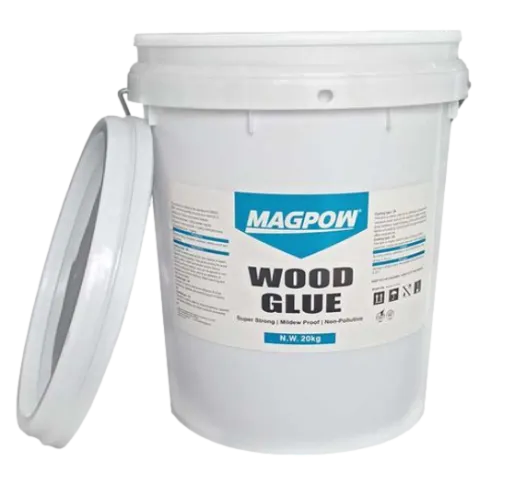
Shenli is the original manufacturer, not a reseller—formula control, production and export delivery all take place in our own factory. Wholesale supply is available, and trial orders start from 20 kg pails. Standard export packaging includes plastic pails, 200 kg steel drums, 1000 kg IBC totes and flexitanks for bulk shipments. Neutral packing, OEM private labelling and multi-language safety labels are supported to meet brand requirements in different countries. Standard grades ship on stable lead times; custom formulations take longer. Goods ship from major Chinese ports, and mixed container loading of multiple grades is accepted for consolidated purchasing.
Quality inspection and documentation
Every batch is fully inspected before delivery—covering solids content, viscosity at 25 °C, pH, residual monomer, peel strength on target substrates and freeze-thaw stability. Each shipment includes a COA, and samples are retained for 12 months. REACH, RoHS and heavy-metal declarations are available on request. Production runs under an ISO 9001 quality system with full raw-material traceability.
Information needed for an accurate quotation
To quote precisely, please provide: substrate type and surface condition; water-resistance class (D2 general interior / D3 humid environment); application method and line speed; target solids or viscosity; packaging type and monthly volume; destination port, plus any special requirements for certificates and labels.
Frequently asked questions
Q1: Is PVAc adhesive the same as common white latex?
Chemically related, but industrial PVAc emulsion differs from retail craft glue in solids, viscosity, film flexibility and water resistance. Direct replacement is not advised without testing.
Q2: Can PVAc adhesive replace solvent-based adhesives?
For porous substrates such as wood and paper, it can replace some solvent-based adhesives and improve workshop VOC conditions. For metal, glass and non-porous plastics, a primer or a different adhesive type is required.
Q3: What does the D3 water-resistance class mean?
D3 means the cured glue line withstands intermittent moisture and humid indoor conditions—suitable for kitchen and bathroom furniture, but not for continuous water immersion.
Q4: What order quantity is recommended for a first purchase?
New buyers should start with a small trial order to verify open time and bond strength on their own lines, then move to drum or IBC bulk orders once confirmed.
Q5: What is the shelf life and storage requirement?
Sealed shelf life is 12 months. Store at 5–35 °C, away from sunlight and freezing. Stir gently before use; slight settlement is normal for high-solids emulsions.
If you have questions about grade selection, formulation matching, test samples or export documentation, please get in touch with our technical and sales team.